
Nature • Safari • Wildlife • The Great Migration • Mountains • Swahili Culture
Sample 1 – Baobabs, big skies and Zanzibar ££
Sample 2 – Tanzania Safari and Pemba Island ££
Sample 3 – Tanzania Luxury and Gorilla Trekking £££££
From Kilimanjaro to the Serengeti
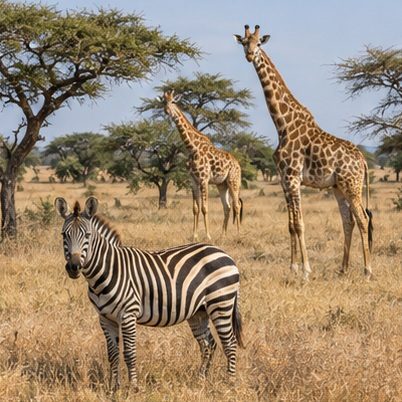
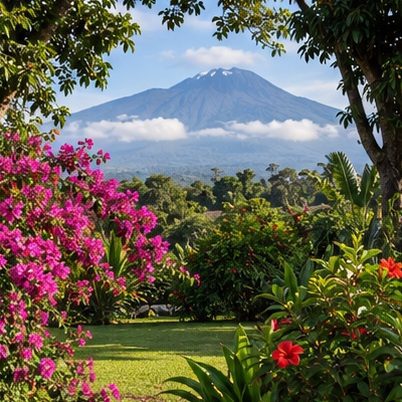
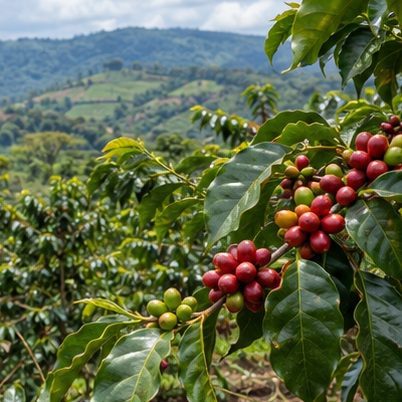
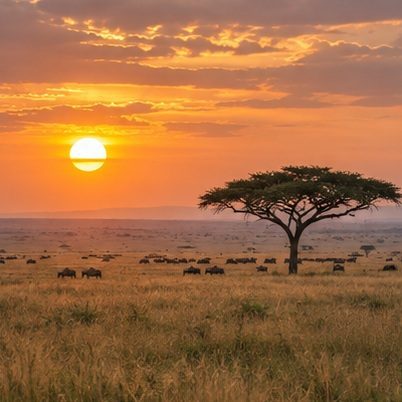
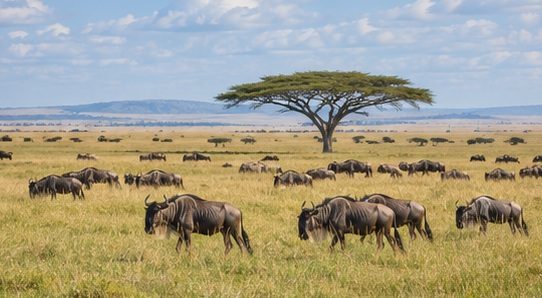
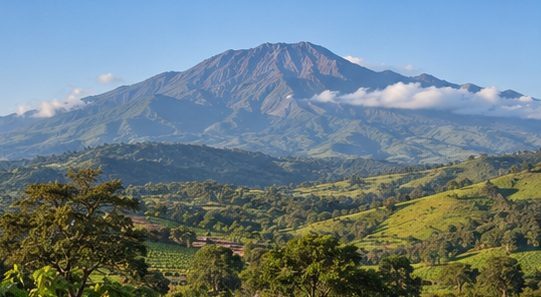
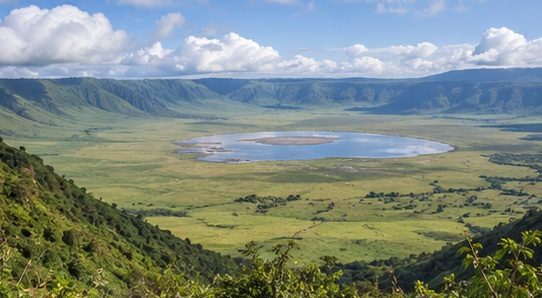
Tanzania feels quite different depending on which direction you take. Around Kilimanjaro, coffee farms give way to forest on the slopes of Africa’s highest mountain. At Ngorongoro, the road winds down from the cool crater rim to open grasslands and a broad salt lake, where you might see lions, elephants and, with a little luck, a black rhino. Then there is the Serengeti itself. Its southern plains seem to go on for ever, while further north, rocky hills and wooded valleys lead down to the Mara River. The great herds of wildebeest and zebra move between these landscapes as the seasons change, so where you stay can make a real difference to what you see.
The quieter side of safari
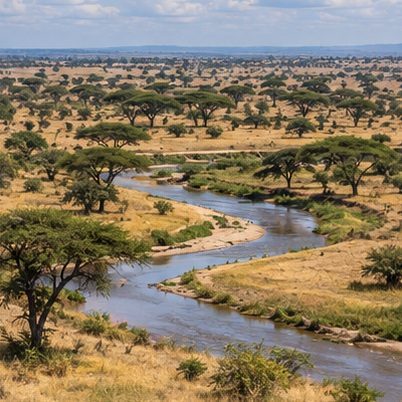
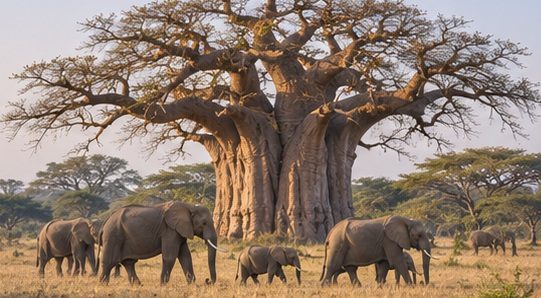
There is a whole other side to Tanzania in the south. In Ruaha, baobabs rise above rocky hills and sandy riverbeds, and as the dry season progresses, elephants gather around the remaining water. In Nyerere, you can spend a morning on the Rufiji River, watching hippos surface in the shallows and listening for the call of a fish eagle. Exploring by boat gives you a different view of the wildlife, and there is something lovely about building a journey that gives you time for both.
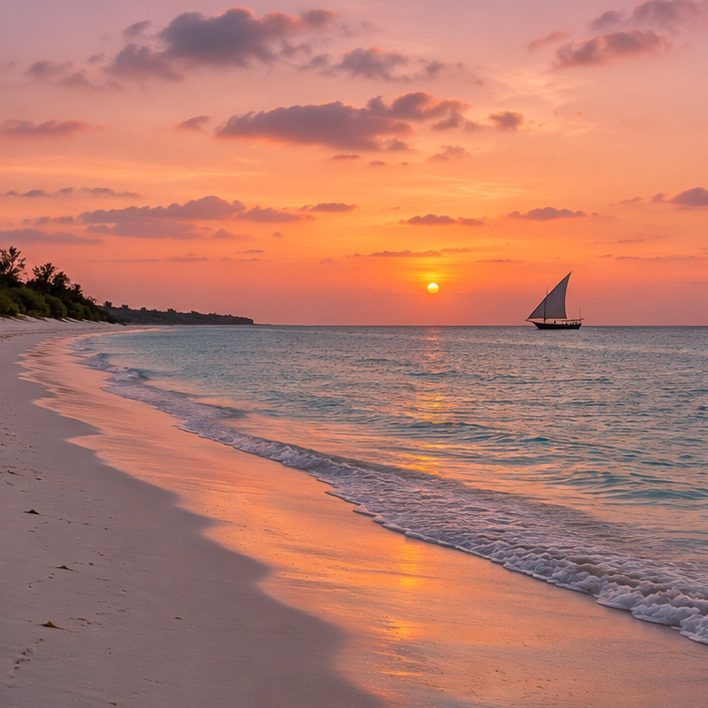
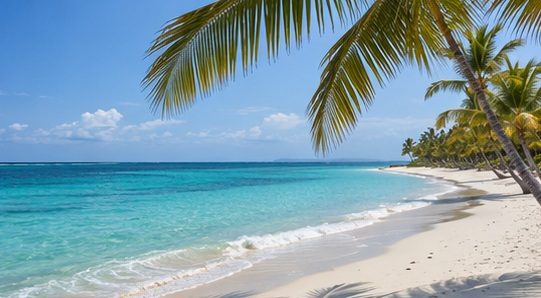
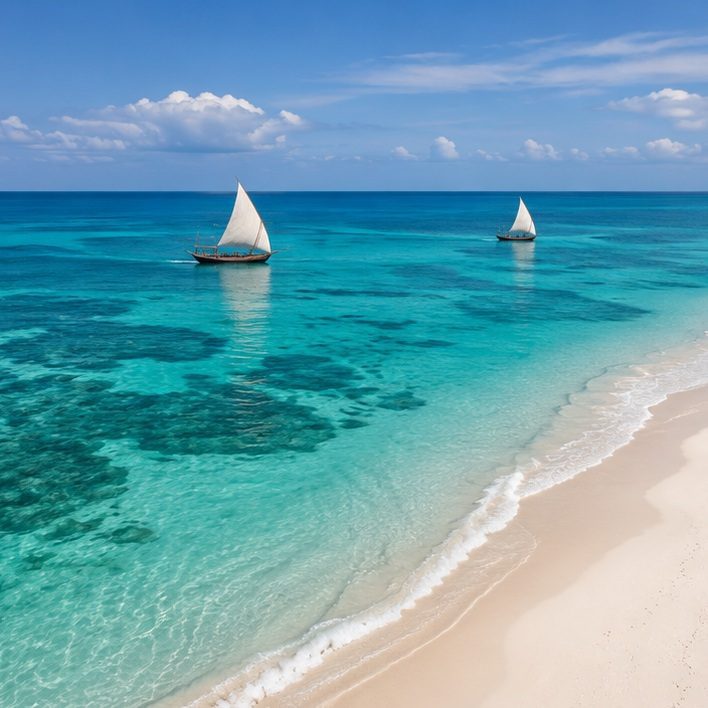
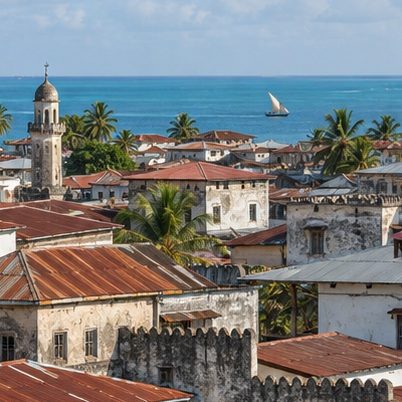
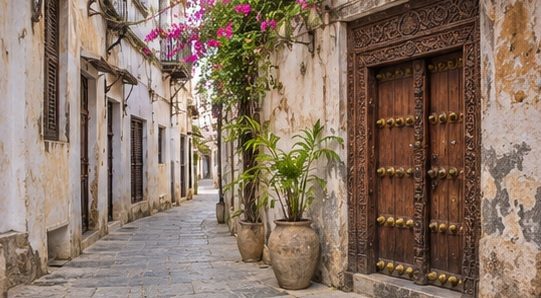
There is plenty to discover between safari days, too. A visit to a Chagga coffee farm in the foothills of Kilimanjaro offers a glimpse of life on the mountain and a chance to taste coffee where it is grown. In Zanzibar’s Stone Town, carved doors, spice stalls and busy waterfront streets tell the story of centuries of Indian Ocean trade, while the former slave market offers a place to learn about a more difficult part of that history. From there, it is easy to see the appeal of a few days by the sea, with time for a Swahili coconut curry and a slower end to the journey.
When to go and when to avoid
June–October | The best time for a first safari
If you are planning your first safari in Tanzania, this is the window I would start with. The dry season makes wildlife easier to spot as animals gather around rivers and waterholes. Combine the Serengeti and Ngorongoro for a classic northern safari, or head south to watch elephants in Ruaha and explore the Rufiji River by boat in Nyerere. It is also a good time to finish with a few days in Zanzibar.
Late July–September | The best chance of a Mara River crossing
Base yourself in the northern Serengeti if seeing the great herds near the Mara River is high on your list. Late July to September is a good window to aim for, and the herds can still be in the area in October. Give yourself several nights here if a crossing is a priority. The herds move with the grazing and can gather by the river for hours before crossing.
Late January–February | The best time for wildebeest calves
Head to Ndutu and the southern Serengeti to see the herds spread across the short-grass plains. February is usually the strongest month for newborn calves, with good chances of seeing cheetahs and lions in the same area. I would pair it with the Ngorongoro Crater for a change of scenery, then finish in Zanzibar if you would like some time by the sea.
November–December | A good choice for green landscapes and birdlife
The short rains bring fresh colour to the plains and can make this a lovely time for photography and birdwatching. I would look at the central Serengeti and Ngorongoro, with the southern plains worth considering as December progresses. If your priority is dry weather and straightforward travel, I would choose June to October.
April–May | The months I would usually avoid
For a first safari, especially one you want to combine with Zanzibar, I would avoid April and May. The long rains can make some safari roads difficult, and some seasonal camps close. If your dates are flexible, I would move the trip to June onwards. If you are considering March, I would favour the first half of the month, as the long rains can begin before April.